

I’m Matt Warner, and I help people pass their home inspection licensing exams on their first try. I hear the same questions over and over. One I hear a lot is: how long should you study for the NHIE?
The truth is simple: most people focus on the wrong metric. It’s not about hours. It’s about mastery, feedback, and consistent performance on full-length practice exams.
This guide gives you a realistic timeline based on real student data and the Bulletproof Test Prep method.
Why “Study Hours” Don’t Predict NHIE Success
People want a magic number — like “study 100 hours and you’ll pass.” That’s not how the NHIE works. I’ve seen candidates fail after 100 hours of unfocused study, and others pass after 20 hours of targeted practice.
The difference is never the time. It’s whether you’re studying the right material in the right order with the right feedback. The only metric that matters is your average on full-length practice exams — complete with high-level questions and answers.
When you can pass five full-length exams with a 75% or higher, you’re ready. Until you can do that, you’re not ready — no matter how many hours you’ve logged.
A Realistic 30–45 Day NHIE Study Timeline (Using Bulletproof Test Prep)
Most students coming out of a qualifying education course study for 30 to 60 days before taking the NHIE. With the Bulletproof Test Prep app, that’s not only realistic — it’s ideal.
If you’ve completed a QE course in a regulated state, you don’t need to read EBPHI’s manuals or grind through every section. The app replaces all of that with a personalized, data-driven study loop. If you’re in an unregulated state, you may need to purchase the NHIE textbooks, but the process is the same.
Week 1: Baseline Exam and Personalized Study Plan
Start with a full-length baseline exam inside the BTP app. Take it cold. No studying. The app’s AI will:
- Analyze your results by domain and system
- Identify your strengths and weaknesses
- Build a personalized study plan based on you
This eliminates guesswork, wasted time, and frustration.
Weeks 1–4: The Bulletproof Study Loop
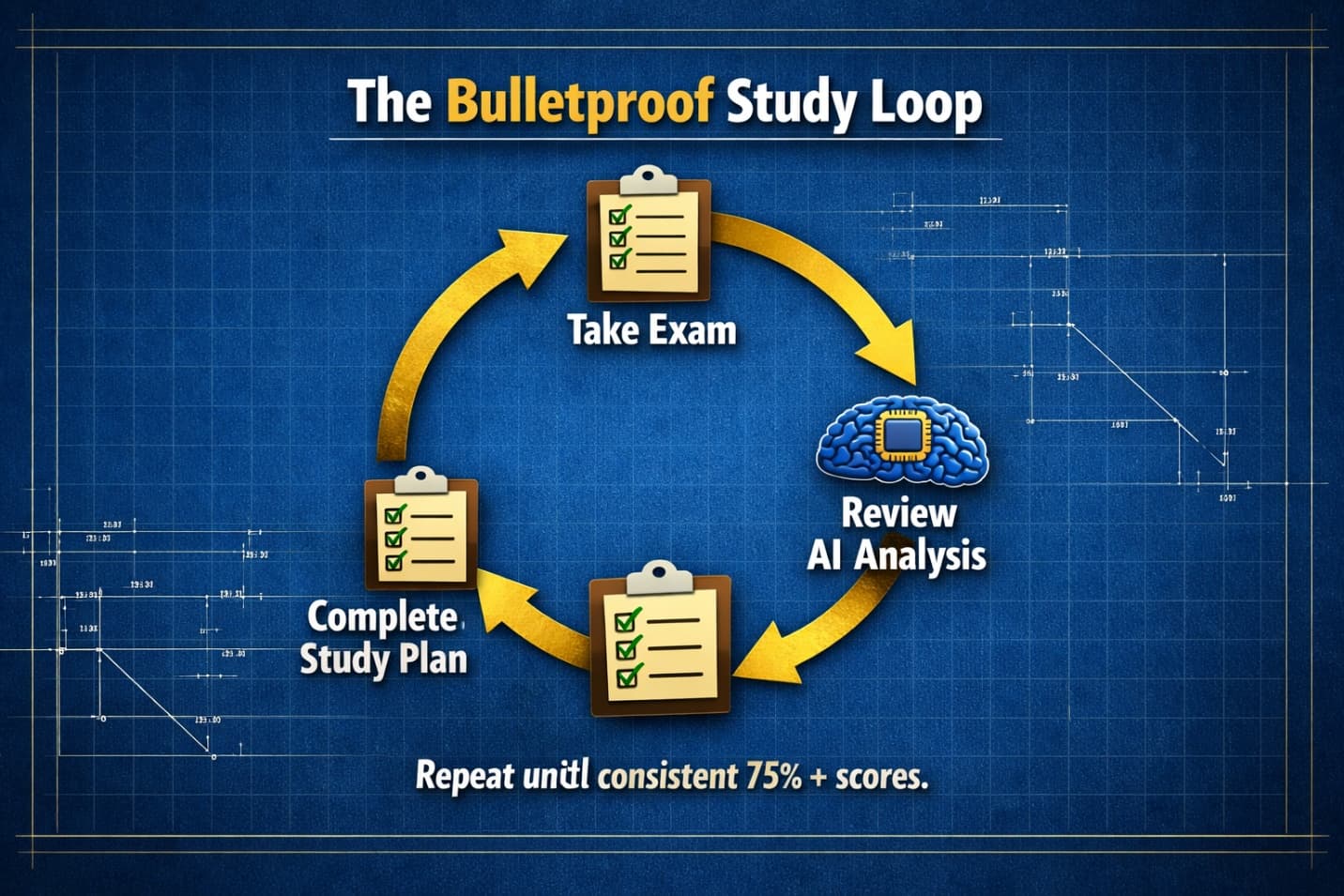
This is the engine that drives your score up. Each week:
- Take two full-length practice exams
- Read the AI analysis
- Follow the personalized study plan
- Take another exam
- Repeat
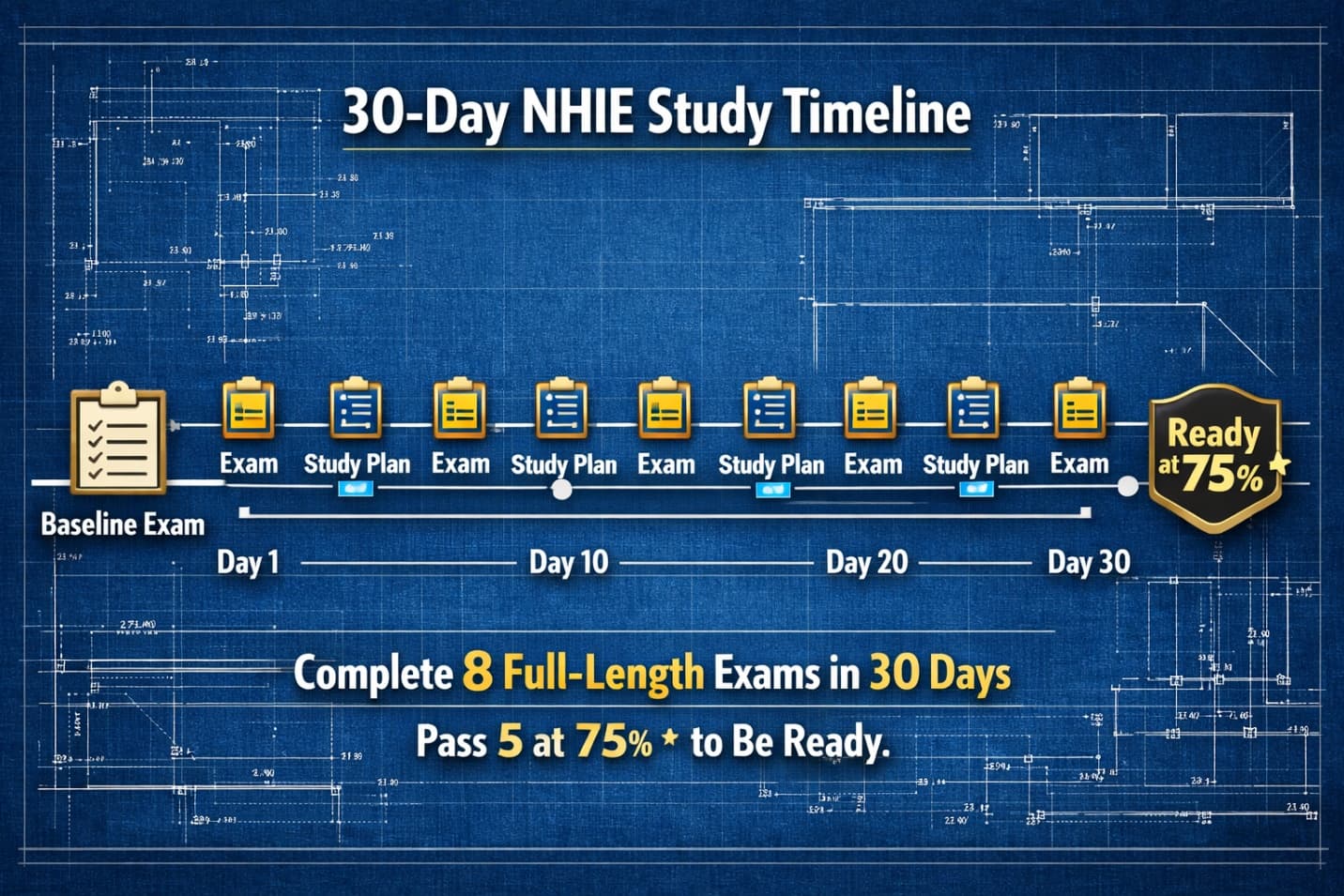
This loop forces your study time into the exact subjects you need. Each progressive test should yield higher scores, so you can see your progress in real time. Most students can complete eight full-length exams in 30 days — far more volume than traditional study methods allow. With 3,500+ scenario-based questions, each exam is unique.
Weeks 5–8: Mastery Through Repetition
If you want extra buffer, or you’re starting from a lower baseline, extend the loop to eight weeks. At two exams per week, you’ll complete sixteen full-length exams. Your goal is simple:
Pass five full-length exams with a 75% or higher. Once you hit that benchmark, you should be ready to pass the real NHIE.
The 30-Day Retake Rule Changes Everything
Remember: if you fail the NHIE, you must wait 30 days before you can retake it. That delay costs you time, money, and momentum. Because of that, you should never schedule the real exam until your practice scores are stable. Stable means:
- Your last three full-length exams are 75% or higher
- No domain is below 65%
If you can’t hit that consistently, you’re not ready. The $225 retake fee plus a month of waiting is far more expensive than another week of focused prep.
Most people get this wrong. They schedule the exam early to “force themselves” to study. What actually happens is predictable: they take it underprepared → fail → lose $225 → lose 30 days → and now they’re studying with less confidence.
Efficient Study vs. Inefficient Study
When I talk about study hours, I mean efficient study. Efficient study includes:
- Full-length practice exams
- Reviewing every missed question
- Working through the exact subjects the AI tells you to focus on
Inefficient study includes:
- Reviewing with ineffective or outdated tools
- Watching videos repeatedly
- Repeating flash-card piles created 25 years ago
- Listening to content while multitasking
The Bulletproof Test Prep app is built around this principle. It eliminates inefficient study and forces your time into the areas that actually move your score.
The Starting Move
No matter what your timeline ends up being, the first step is always the same:
Take a full-length baseline exam. Cold. No studying.
Most candidates resist this because they’re nervous about the score. But the score is the entire point. The BTP app gives you:
- A domain-by-domain breakdown
- A system-level analysis
- A personalized study plan based on your actual weaknesses
Don’t pick a timeline first. Take the diagnostic. Then build the timeline around the data.
Start with your baseline — free
Take the free NHIE diagnostic and get a domain-by-domain AI breakdown of your readiness in minutes. No account, no credit card.
Take the free sample exam →Frequently asked questions
- How long should you study for the NHIE?
- Most candidates study 30 to 60 days after a qualifying-education course, but time isn’t the real metric. You’re ready when you can pass five full-length practice exams at 75% or higher — some reach that in a few weeks, others need longer.
- How many hours do you need to study for the NHIE?
- Hours don’t predict success. Candidates have failed after 100 hours of unfocused study and passed after 20 hours of targeted practice. What matters is studying the right material in the right order with feedback — measured by your average on full-length practice exams.
- How do you know when you’re ready to take the NHIE?
- Your scores are stable: your last three full-length practice exams are 75% or higher and no domain is below 65%. Until you hit that consistently, you’re not ready — don’t schedule the real exam yet.
- What happens if you fail the NHIE?
- You must wait 30 days before retaking it and pay the $225 retake fee, losing time, money, and momentum. That’s why you should never schedule the real exam until your practice scores are consistently stable.